
Do Influencer Campaigns Boost AI Searchability? A Guide for Australian Marketers
The short answer: Yes - but only if you know how to use them strategically.
For the past 30 years, getting found online meant one thing: rank well on Google. A prospective client typing a question into a search bar was already warm, no ad spend required to get their attention. So brands poured resources into SEO: optimising content, fixing technical errors, and chasing page-one rankings.
Then AI search arrived and changed the rules. Australia leads globally with 1.42 AI queries per person (highest worldwide) and 49% of Aussies using gen AI yearly with tools like ChatGPT now handling local services and recommendations.
Tools like ChatGPT, Claude, and Gemini answer questions directly. They synthesise information, cite sources, and recommend brands in a way that feels personal and authoritative. The brands winning in this new landscape are thinking about something older and more fundamental: Trust.
What Is E-E-A-T and Why Does It Matter More Than Ever?
E-E-A-T stands for Experience, Expertise, Authoritativeness, and Trustworthiness. It comes from Google's own Search Quality Rater Guidelines and was originally designed to help human raters assess content quality. Now it's become the backbone of how AI systems decide which brands to surface and recommend. AI Overviews appear in 39% of Australian queries (vs. 13–16% global), prioritizing E-E-A-T for local brands like Jim's Group.
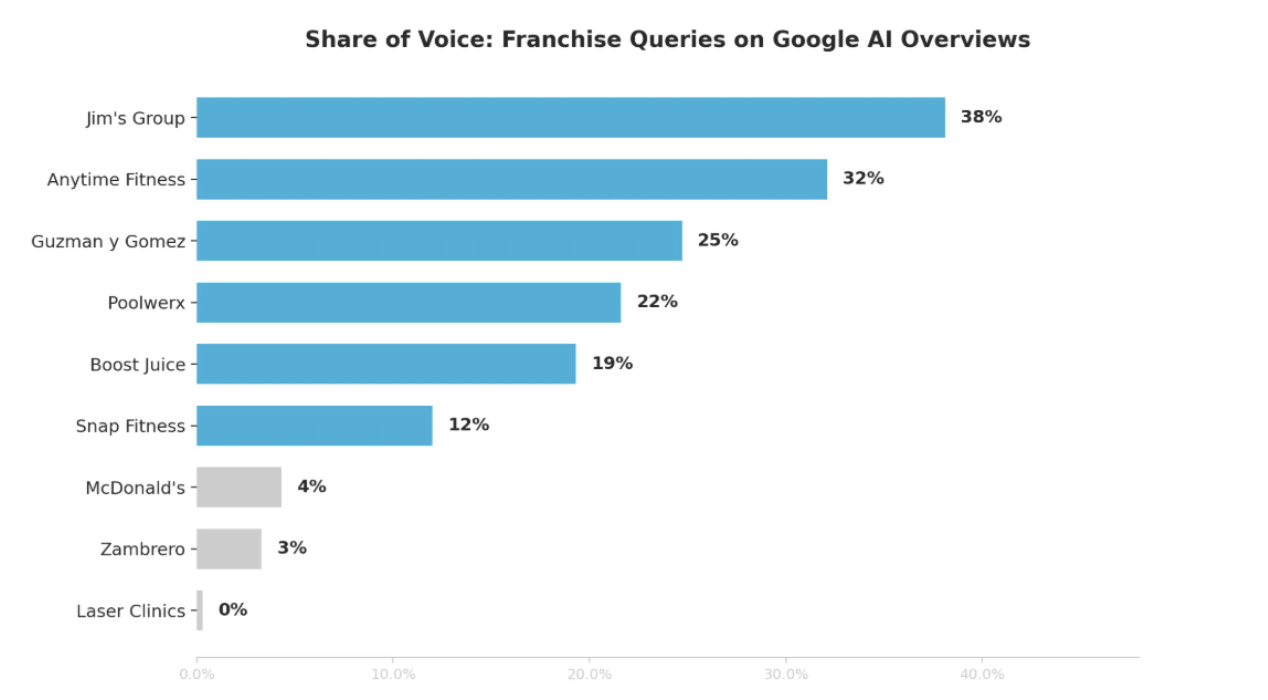
If you want ChatGPT or Claude to mention your brand, you need to demonstrate all four qualities consistently, across multiple platforms.
Here's how to do it practically:
Own a niche. Position your brand as a clear, consistent leader in one specific space. Specialists get cited; generalists get lost.
Make your content machine-readable. Proper structure, including headers, lists, tables, and semantic HTML, helps AI systems parse and cite your content correctly.
Earn external proof. "Best of" roundups, podcast mentions, press features, and third-party reviews signal credibility to AI far more than self-promotion ever will.
Optimise content for AI directly. Answer-first FAQs, long-tail question clusters, and topic pillars that reinforce a consistent theme are the building blocks of AI-visible content.
Maintain consistent brand mentions across platforms. Familiarity across multiple touchpoints builds the kind of signal AI models trust.
Track, test, and iterate. Use tools like Semrush or manually test prompts to see where your brand surfaces.
Include personalisation signals. Location data, device context, and authentic metadata tell AI systems there's a real human and a real brand behind the content.
So Where Do Influencers Fit In?
Creator campaigns are one of the most underrated tools for building E-E-A-T signals, especially when done right. 81% of Australian brands use influencers, with 89% reporting strong TikTok ROI and nano-creators excel for E-E-A-T in niches like beauty/wellness.
Here's why influencers work so well for AI searchability:
Experience: A well-crafted creator testimonial demonstrates real-world use of your product in a way that feels genuine and specific.
Expertise: The right creator already has deep credibility with their audience. A skincare brand partnering with a trusted skincare creator borrows that expertise instantly.
Authority: Creators have spent years building authority in their niche. Collaborating with them connects your brand to that existing trust.
Trustworthiness: Creator communities are built on personal relationships. You're being introduced instead of interrupting the flow.
The Mistake Most Brands Make
Most brands stop at the paid partnership tag and a boost. That's leaving serious value on the table.
The brands getting the best results, in both reach and AI visibility, treat creator content as a starting point rather than a finish line:
Embed creator videos into long-form articles to generate searchable, indexed content.
Build PR and media outreach around the collaboration to earn external mentions.
Repurpose the content across owned channels, including email, social, and landing pages.
Commission follow-up content from the creator to deepen the narrative.
A great example: we've been working with
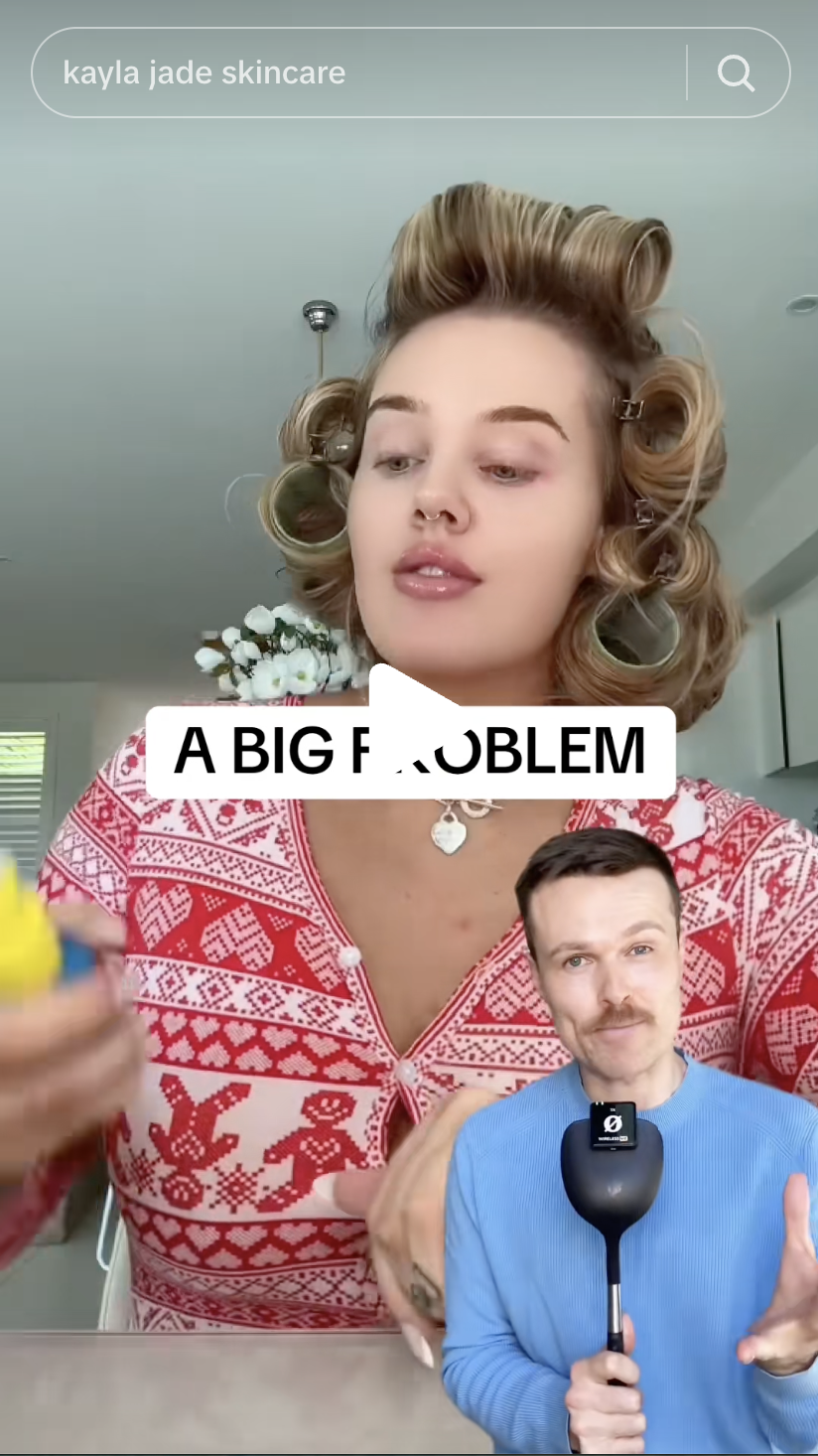
Take Boring without You, an Australian skincare company, for example. For over 18 months, their partnership with our talent Kayla Jade is a textbook case of leveraging creator content well beyond the initial post, generating ongoing brand signals that compound over time.
A few tactical tips:
Choose creators who are already surfacing in AI-generated recommendations in your category.
Work with multiple creators if budget allows, since signals from diverse sources carry more weight.
Build measurement into every campaign from the start, not as an afterthought.
Is Traditional SEO Dead?
No, and anyone telling you otherwise is selling something.
I've been working closely with Adam Clume from Decode Digital on this topic which he’s been writing about. His take is clear: Organic search drives 46% of Australian Google queries with local intent, still converting 78% of mobile searches to purchases within 24 hours. The core principles of E-E-A-T benefit both traditional SEO and AI searchability simultaneously.
Adam's key insight is that Google has shifted from evaluating individual web pages to modelling entire businesses as entities, watching how they evolve and behave over time. A business that acquires 40 backlinks in six weeks, or has 92 perfect five-star reviews with no variation, looks manufactured. Real businesses have friction, inconsistency, and organic noise. That's what builds credibility with both Google and AI systems.
His formula is worth bookmarking: (Authority + Trust + Uncertainty) x Time. Pull any one of those dimensions ahead of the others and the whole picture becomes inconsistent. Inconsistent entities get suppressed.
The takeaway: SEO and AI search are complementary tools. A strong SEO foundation makes your brand more visible to AI. Strong AI visibility reinforces your authority in search. Build both, and you've got something genuinely powerful.
The Bottom Line
Every few years, a new technology reshapes how brands get found. AI search is the biggest shift since Google itself. With traditional search volume dropping 25% by 2026 Down Under, influencer-AI hybrids are the edge.
What’s stunningly counterintuitive about it is that AI systems are increasingly good at recognising and rewarding authentic human voices, real expertise, and genuine community trust.
This means that Influencer marketing, done strategically, delivers exactly that.
The brands that will win are building something worth recommending.
Frequently Asked Questions
Does influencer marketing actually improve AI search visibility?
Yes, when done strategically. Creator content builds E-E-A-T signals across multiple platforms, generating the kind of authentic, distributed brand mentions that AI systems use to evaluate credibility and authority.
What is E-E-A-T and why does it matter for AI search?
E-E-A-T stands for Experience, Expertise, Authoritativeness, and Trustworthiness. It's the primary framework AI systems use to assess which brands and sources are worth recommending in response to user queries.
How do I get my brand mentioned by ChatGPT or Claude?
Focus on earning consistent brand mentions across trusted third-party platforms, creating structured and answer-first content, and building genuine authority signals over time. There is no shortcut. Credibility has to be earned, and AI systems are increasingly good at telling the difference.
Is SEO still relevant in the age of AI search?
Absolutely. Organic traffic accounts for 46% of Australian local intent queries, and the foundations of strong SEO, including E-E-A-T, directly support AI searchability. The two strategies reinforce each other.
What kind of influencer content works best for AI visibility?
Content that is specific, testimonial-driven, and repurposed across multiple platforms performs best. A creator video embedded in a long-form article, backed by PR mentions and social distribution, generates the kind of multi-platform signal that AI systems weight heavily.