
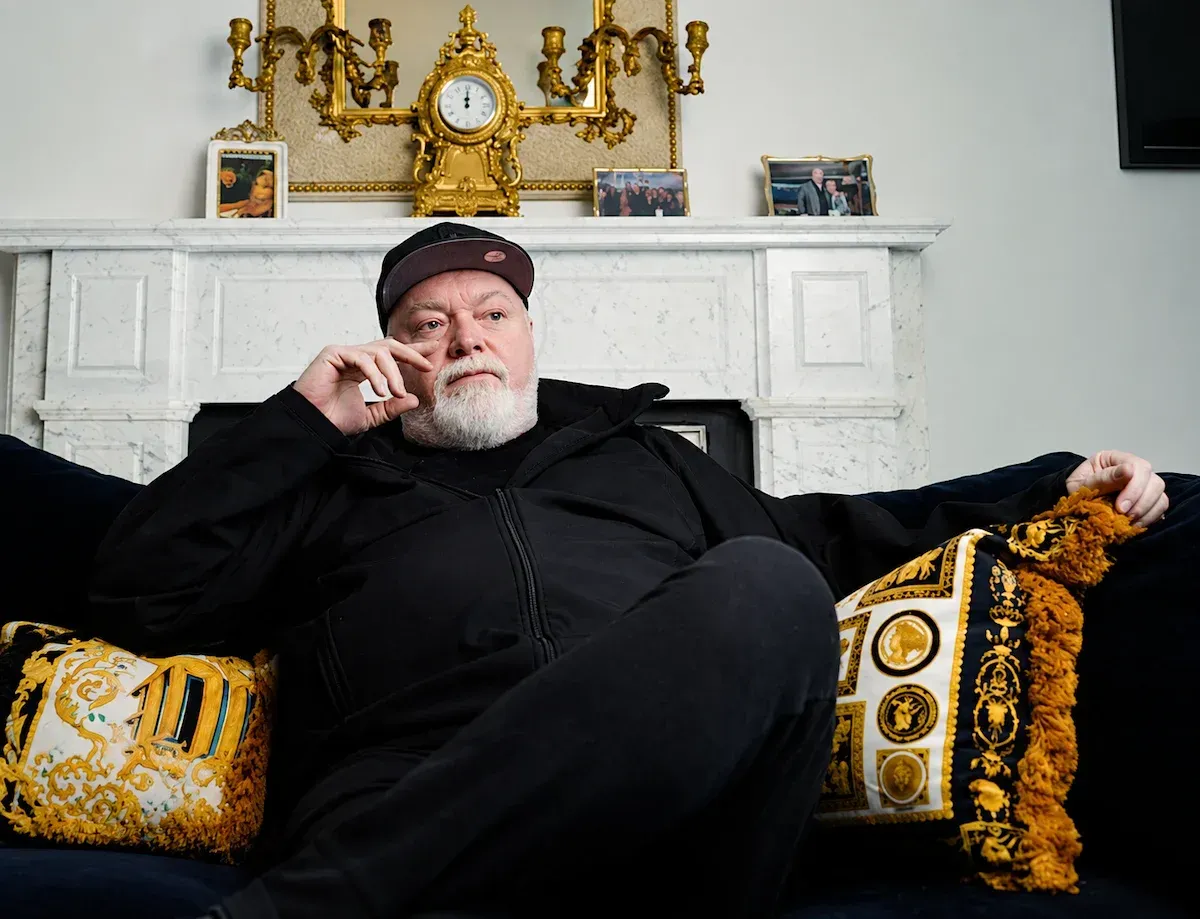
Will Kyle Sandilands’ Podcast Succeed? What It Means for Radio, Advertising and Independent Creators
Will Kyle Sandilands’ Podcast Succeed? What It Means for Radio, Advertising and Independent Creators
A talent-manager perspective on whether Kyle can turn radio fame into a creator-owned business and whether his move could help make podcasting a more serious commercial channel.
There is no getting around it: Kyle Sandilands is a polarising figure.
And whenever someone writes about a figure like Kyle, it’s important to be upfront about where they’re coming from. I’ve been exposed to enough misogyny in my life that even the hint of it turns me off, even when it’s dressed up as entertainment. But analysing someone’s business decisions is not the same thing as endorsing their behaviour. If anything, understanding why people succeed helps us understand where media is heading.
That’s what interests me most.
Kyle’s move into podcasting is not just another celebrity launching a show. It is one of the biggest tests we’ve seen of whether Australia’s biggest radio personalities can build independent media businesses, and it could shape how advertisers think about podcasting as a commercial channel.
That’s why this story matters, even if you’ve never listened to Kyle.
What success means
Before deciding whether Kyle’s podcast will succeed, the first question is obvious: what does success even mean?
For me, it comes down to five things.
The first is money. Not just a splash of revenue, but a consistent flow of income that is meaningful compared with what he made in radio.
The second is reach. Can he attract a large enough audience outside the radio machine that made him unavoidable for so long?
The third is influence. Can he still become part of the conversations people are having at work, in group chats, and in the media?
The fourth is sustainability. A big launch is nice. A durable business is better. The real test is whether curiosity turns into habit, and whether people come back week after week once the initial noise has settled.
The fifth is efficiency. Podcasting does not need to earn radio money to be a success if it can do more with less, run leaner, and give the talent more ownership over the upside.
That’s the lens I’d use: money, reach, influence, sustainability and efficiency.
Can he make the money work?
Let’s start with the obvious benchmark.
Kyle’s reported radio package was enormous. The most detailed recent reporting described a base salary of $7.4 million, plus $200,000 in consultancy fees, $2 million a year to license The Kyle and Jackie O Show brand, $500,000 in contra airtime, and a $120,000 flight allowance, taking the annual package to about $10.22 million before bonuses or other side deals.
That is not a small number to replace.
His new structure is very different. ARN agreed to pay him $12.09 million in cash over three years, provide $1.5 million in advertising support for his new venture, and take 19.9% of the revenue from that venture for up to three years. The new project is being framed as a subscription-based, independent media venture, not a traditional radio format.
That means the economics change completely.
Instead of being paid primarily as talent inside a network system, Kyle is moving into a model where he can earn from subscriptions, sponsorships, brand deals, video, clips, and any commercial spin-off that the show creates. That does not automatically mean he will make more money. It means the business is structured differently.
And different can be better.
If a weekly podcast averaged 500,000 listens per episode and sold two host-read ad slots at a $40 CPM, that would imply about $40,000 gross per episode, or roughly $160,000 gross per month before production costs, sales commission, revenue shares and platform fees. Over a year, that would be about $1.92 million gross from those ad slots alone.
That is not radio money. But it is also not trivial.
And if the show also had a subscription layer, the numbers become more interesting. If, hypothetically, 100,000 subscribers paid $5 a month, that would imply $500,000 gross a month, or $6 million gross a year before fees, churn, taxes and production costs. That’s not a prediction. It’s just a useful way of showing how quickly the commercial picture can change once audience attention is monetised directly.
So the answer is not whether he can make money. He absolutely can.
The real question is whether he can make enough, consistently enough, to rival the economics of radio. My answer is that he probably can build a serious business, but it will likely look different from the salary-heavy structure he had before.
Why the leaner model matters
This is where podcasting becomes interesting as a business, not just a format.
Podcasting is simply a leaner medium than commercial radio. Radio comes with studios, broadcast infrastructure, live transmission, engineering, scheduling and large operational teams. Podcasting strips a lot of that away. One recording session can become an audio episode, a YouTube clip, a social asset and a promotional tool.
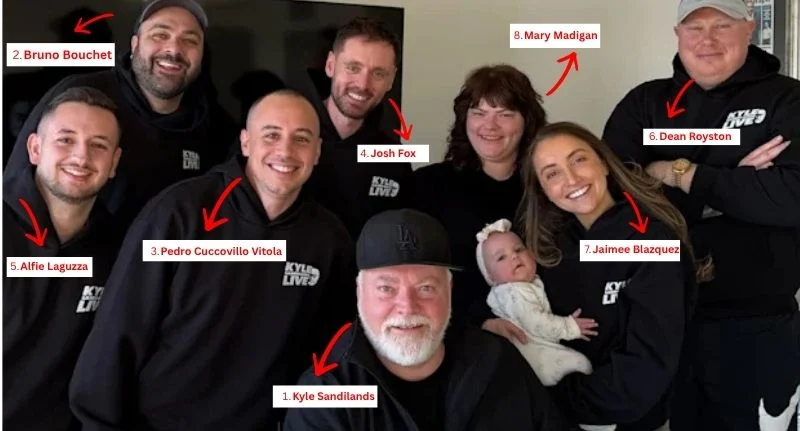
That matters because Kyle doesn’t need to replace every dollar of radio revenue to build a successful business. He may end up with a healthier business simply because the economics are different.
He is also stepping away from a much more restrictive environment. Public reporting on his ARN deal indicated requirements around live shows, public appearances, pre-recorded ads, social content, emergency programming and broadcast logistics. Podcasting gives him more flexibility, and flexibility has value. It gives him time to pursue other business opportunities, other formats and other commercial relationships.
That is a real advantage.
Can he reach the same audience?
This is the part where podcasting gets hard.
At its peak, The Kyle and Jackie O Show reached around 818,000 listeners in Sydney and roughly 450,000 in Melbourne, so the combined reach was well over a million across markets at certain points. That is a huge audience by any standard.
But podcasting is a different habit.
Radio almost finds you. You get in the car, the show is already on. It’s playing in the background at work or in the gym, and you didn’t necessarily choose it in a deliberate way. Podcasting asks the listener to make a choice. That makes the barrier to entry higher, but it also makes the audience more valuable.
Someone who deliberately opens Spotify or YouTube every week is usually a more committed audience member than someone who simply happened to hear a show while driving home. They are more engaged, easier to measure, and generally more useful to advertisers.
That is the commercial upside.
My prediction is that Kyle launches with enormous numbers because curiosity alone will drive a huge spike. Long term, I suspect the audience settles somewhere around 400,000 to 500,000 genuinely loyal monthly listeners. That is still a very serious podcast audience. And if enough of those listeners become paying subscribers, the business can work.
The challenge is not whether the audience exists. It’s whether it will convert, and whether it will keep coming back once the novelty wears off.
Why commercial trust matters
This is, to me, the most underrated part of the whole story.
Podcasting does not just sell reach. It sells attention.
Podcast advertisers care about more than download counts because listeners are often more likely to trust host-read ads, remember them and act on them. That is one reason podcast CPMs tend to be higher than radio CPMs, especially for host-read inventory.
So Kyle’s podcast does not just need to attract listeners. It needs to create commercial trust.
If one of Australia’s biggest radio personalities proves that a creator-owned show can command serious attention and monetise it cleanly, that does something bigger than help Kyle. It gives advertisers more confidence in podcasting as a medium.
And that matters for every independent creator trying to build a business.
Because once advertisers trust the medium more, they stop treating podcasting like an experiment. They start treating it like a channel.
That is the real industry upside here.
Can he still matter culturally?
This is the hardest factor to predict.
Kyle’s influence on radio was never just about audience size. It was about presence. He was part of the public conversation in a way that daily radio still makes possible. Podcasting is more intimate, but it is less unavoidable.
So the question is not just whether people listen. It’s whether they still talk about it.
Will the clips travel? Will the interviews land? Will the show create the kind of noise that gets picked up elsewhere? Will it still shape conversation outside the app?
That also affects guests. Radio has institutional gravity. Labels, publicists and celebrity teams know how to work with a station because stations are stable and broad-reach. An independent podcast is a different proposition. The question is whether Kyle can maintain that level of pull without the station infrastructure behind him.
A useful parallel
A strong comparison is Adam Buxton in the UK. He came out of radio and TV-adjacent fame, then built a durable, personality-led podcast that feels creator-owned rather than network-owned.
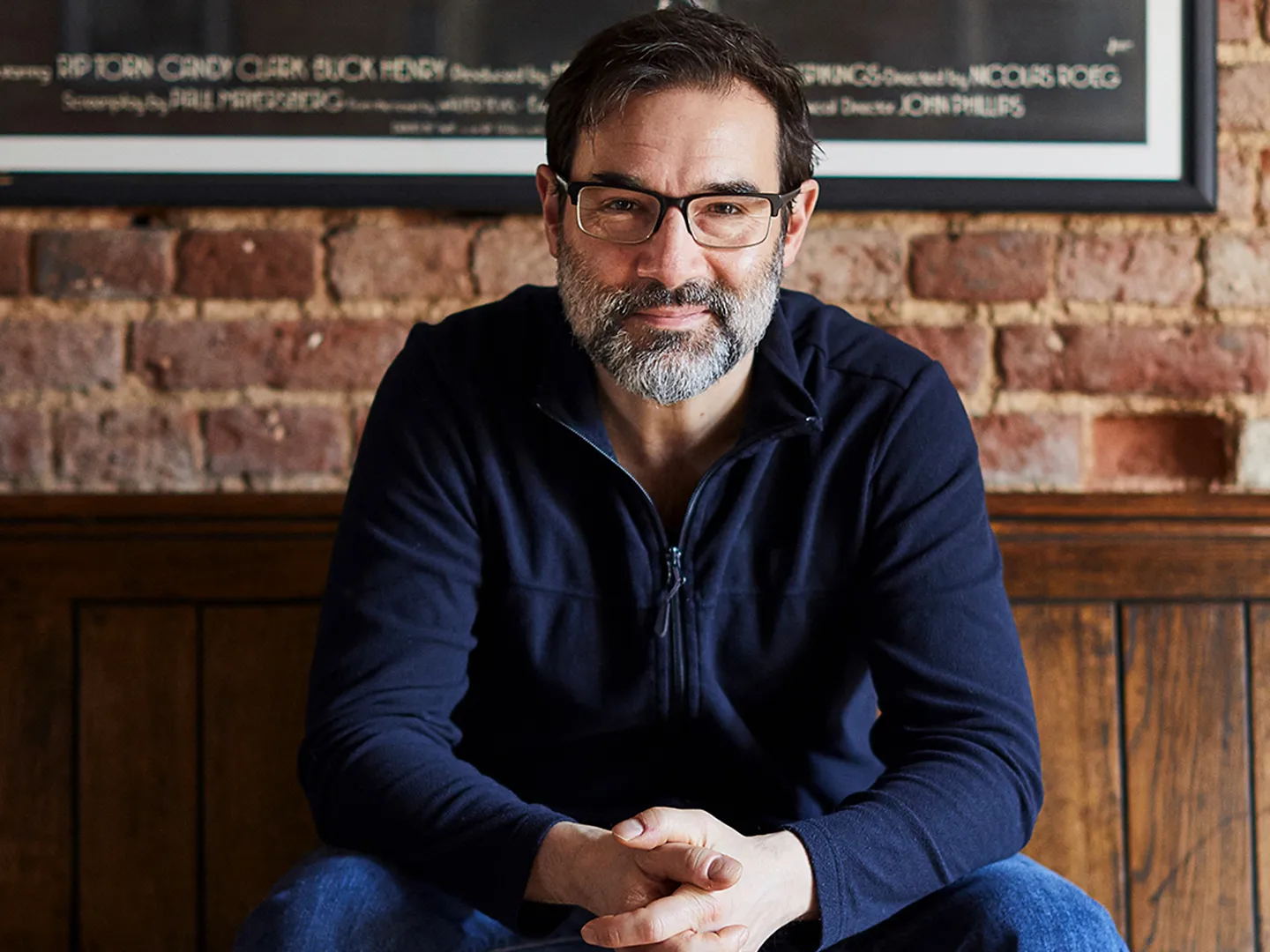
That comparison works because both are personality-first figures. People listen for the host as much as the format. The difference is tone. Buxton is lower-temperature, more conversational and easier to place in a brand-safe ecosystem. Kyle is louder, more volatile and more dependent on boundary-pushing.
That gives Kyle a bigger attention engine, but also more advertiser risk.
Hamish & Andy are another useful reference point.
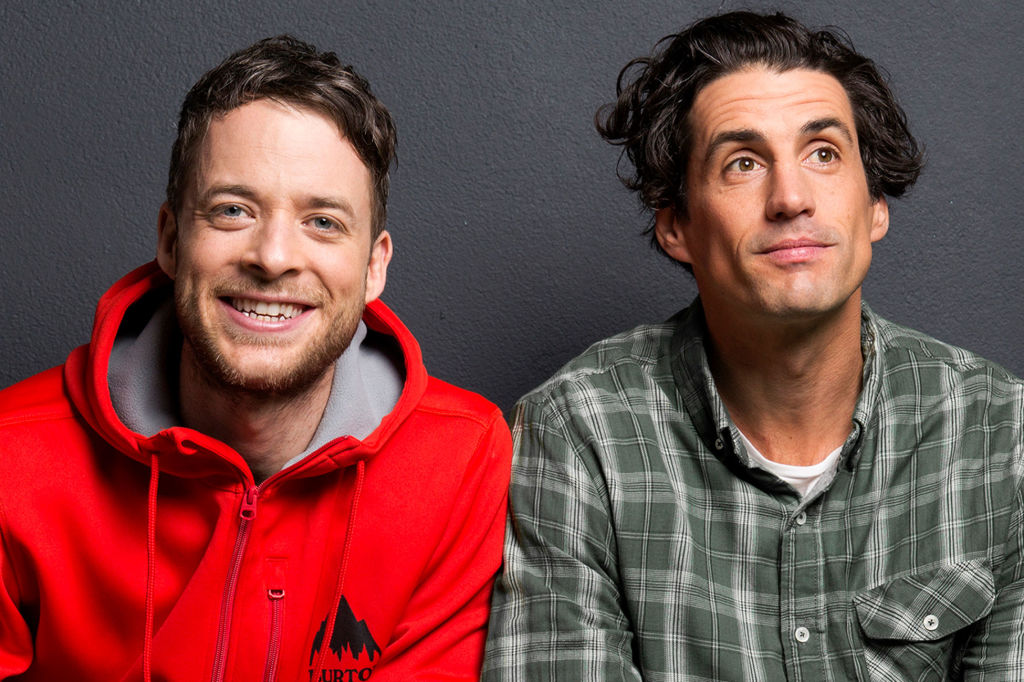
Their podcast has consistently ranked among Australia’s biggest, with monthly listener numbers in the high hundreds of thousands and at times above that. They prove that big Australian broadcasting personalities can absolutely carry audience loyalty into podcasting. But they also show that the commercial model depends on the kind of audience you have, not just the size of it.
So will his podcast succeed?
Yes... but only if success is defined properly.
If success means building a meaningful independent media business with multiple revenue streams, audience loyalty and enough commercial upside to matter, then yes, I think Kyle has a real shot. He has the name recognition, the controversy, the curiosity factor and the commercial infrastructure around him.
If success means instantly replacing the exact economics of peak radio, I’m less convinced. Radio gave him industrial-scale reach and a very large compensation structure. Podcasting is more direct, but less automatic.
My more defensible prediction is this: Kyle’s podcast probably will not replicate radio in form, and it does not need to. If it works, it will work because it is leaner, more measurable, more flexible and more directly tied to audience loyalty.
And if it works even moderately well, the bigger story may not be Kyle’s own bank balance.
It may be that his move gives advertisers more confidence in podcasting as a medium and helps widen the commercial path for other independent creators.
That would be a meaningful success story, even for people who never listen to him.
Resources
Kyle Sandilands settlement and podcast move reporting[smh.com]
Radio vs podcast advertising economics[acast]
Podcast trust and host-read ad research[theharrispoll]
Hamish & Andy podcast ranker reporting[au.variety]
Adam Buxton / UK precedent[en.wikipedia]