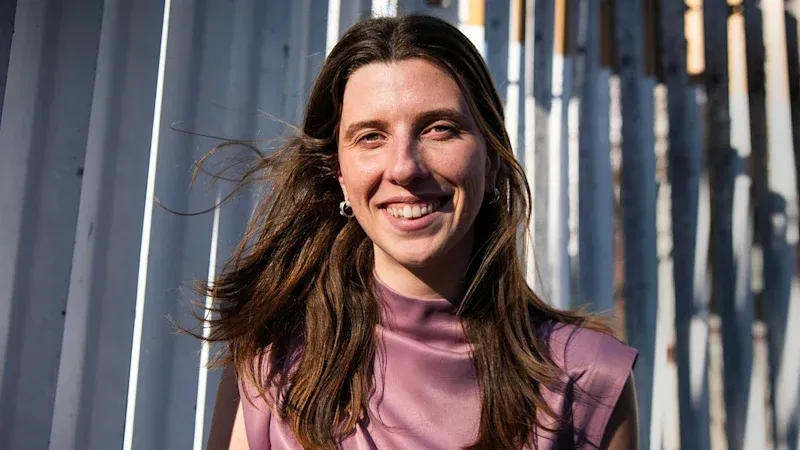
Hannah Ferguson, Grayndler and the Rise of Creator Politics
What Hannah Ferguson’s Campaign Reveals About Media, Influence and Political Power
As creators become a mainstream pathway to news and political discussion, building an audience is becoming a meaningful, but still incomplete, form of political capital.
Media and politics used to feel like separate worlds. I’m not sure they do anymore.
When I was growing up in the 1990s, politicians relied on media to get their message out, manage perception and shape public opinion. But there was still a fairly clear distinction between the people making the news and the people trying to win power.
That distinction feels thinner today.
Personal brands, podcasts, newsletters, Instagram pages and creator-led media are no longer just channels politicians use to communicate. Increasingly, they are becoming part of the political infrastructure itself.
Hannah Ferguson’s decision to run as an independent against Prime Minister Anthony Albanese in Grayndler is a timely example of that shift. She is entering a political race with something most first-time candidates spend years trying to build: attention, familiarity and an existing relationship with an audience.
Politics used to be built around gatekeepers. Candidates needed party endorsement, media access, institutional backing and years of relationship-building before they were taken seriously. Their public profile was usually built after they entered politics.
Today, influence can be built long before someone ever announces they are running.
A political audience before a campaign
Hannah Ferguson is not entering politics as an unknown.
Through Cheek Media and Big Small Talk podcast co-hosted and produced by Sarah-Jane Adams, she has already built a recognisable public voice among younger Australians who are politically engaged, culturally literate and often frustrated with the way traditional politics speaks to them. Cheek Media has built a significant audience across its newsletter, Instagram and podcast ecosystem, giving Ferguson a level of reach and recognition few new candidates begin with.
That does not equal votes, of course.
But it does mean she starts with an existing community. It's people who already know her voice, understand her values and have spent years seeing her explain political issues in a way that feels more direct and culturally fluent than much of the legacy political media landscape.
She is also entering politics at a time when the way Australians find news is changing quickly.
The University of Canberra’s Digital News Report Australia 2026 found that 43% of Australian news consumers get news from creators or influencers. Among 18–24-year-olds, that figure rises to 70%.
That does not mean traditional news is gone, or that creators have replaced journalism. Television remains widely used, and many people who use creators for news still rely on other sources. More than half of people who get news from influencers say creators meet only some of their news
But it does show something important: the route into public attention has changed.
People are increasingly finding political information through faces they recognise, voices they trust and formats that feel accessible. Creator-led news is often viewed as more entertaining, relatable and easier to understand than traditional outlets, even when audiences do not necessarily consider it more impartial or more trustworthy.
Trust has not simply moved from institutions to individuals. It has become more personal, selective and fragmented.
When the audience is already there
I saw that shift firsthand when I booked Anthony Albanese to appear on Abbie Chatfield’s podcast while I was working on the show.
It stood out because the audience was already there.
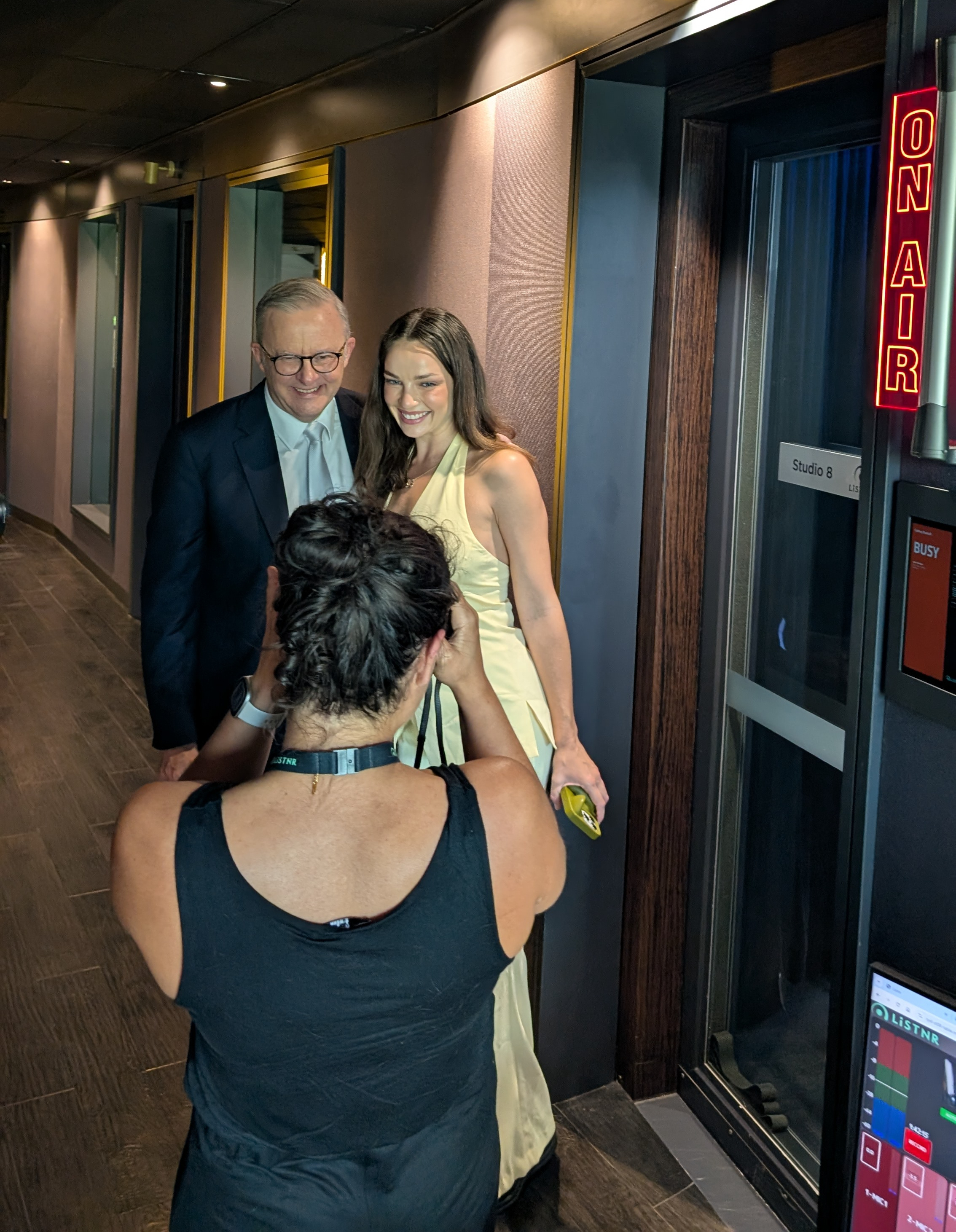
Albanese was not entering a traditional political-media setting where the format, framing and audience relationship were controlled by a newsroom. He was stepping into a community built around Abbie’s voice, her values and the relationship she had developed with her listeners.
That matters because politicians no longer have to wait for a newspaper interview, a television bulletin or a party-room press conference to reach people who are interested in politics but disconnected from its traditional formats.
They can enter communities that have already formed elsewhere.
Public influence is no longer built only through traditional political pathways. A person can now spend years explaining issues, developing a point of view, building cultural relevance and becoming familiar to an audience before ever stepping onto a campaign stage.
Ferguson’s candidacy does not prove that creators can turn followers into votes. But it does show that public influence can now be built outside the old political pipeline, and later carried into politics.
Why Grayndler matters
Grayndler is an interesting place to watch this play out.
It is an inner-metropolitan Sydney electorate covering areas including Marrickville, Newtown, Petersham, Leichhardt, Dulwich Hill, Ashfield, Stanmore and Summer Hill. It is also highly educated and renter-heavy: at the 2021 Census, 49.3% of residents aged 15 and over held a bachelor degree or higher, compared with 27.8% across New South Wales. Meanwhile, 44.1% of occupied private dwellings were rented, compared with 32.6% statewide.
Obviously, those figures do not predict a vote. But they help explain why issues such as housing, the cost of living, climate, inequality and political representation can carry particular weight in an electorate like this one.
There is also a broader exhaustion with legacy politics that Ferguson’s candidacy taps into.
Australians have not given up on democracy itself, but trust in the people and parties operating within it remains weak. In 2025 the McKinnon Index reported that 76% of Australians said democracy was preferable to any other system, while only 38% said they trusted the federal government as a result of an ANU Centre for Social Policy Research survey conducted in October of 2024. Political parties continue to be among Australia’s least trusted institutions; in February 2026, Democracy Pulse showed that just 32.4% of respondents said they trusted them.
That distinction matters.
People are not necessarily rejecting politics. Many are rejecting the feeling that politics is too managed, too slow, too internally focused, or too disconnected from the issues affecting their actual lives.
In Grayndler, that frustration is not automatically a vote for an independent. Albanese won 53.54% of first-preference votes in 2025, while the Greens won 25.11%. After preferences, Albanese retained the seat with 66.86% of the two-candidate-preferred vote.
The seat has a strong Labor history, a substantial Greens vote and voters likely to be closely engaged with questions of housing, climate, Gaza, inequality and representation. That creates space for a candidate who can make people feel that traditional politics has stopped listening, even if turning that feeling into votes will be much harder.
That is where Ferguson’s existing media platform becomes relevant.
Her audience may not be a political base yet, but it gives her a way to speak to people who are already looking outside the usual political channels.
Influence is not just fame
Building an audience and building a political base are not the same thing.
A political base requires more than reach. It requires local organisation, volunteers, donor networks, policy credibility, a reason for people to change their vote and the ability to turn passive attention into active support.
As someone who works in talent, I think this is the part people often underestimate.
Influence is not just fame. It is trust, repetition, relevance and emotional recognition. It is the reason someone stops scrolling, listens to your explanation, sends your content to a friend or feels that you are speaking to something they already feel but have not found the language for.
The creator economy has already proved those things can move markets. It has changed the way people discover products, make decisions and form communities around particular voices.
Politics is different.
Voting is more complex than buying something, and a campaign has to withstand a level of scrutiny that a media brand does not always face. It has to show up locally, develop policy, answer difficult questions and give people a reason to believe that the person they follow online can represent them effectively in parliament.
But the underlying question is now impossible to ignore: can the relationship a creator builds with an audience become durable political support?
The real test
Hannah Ferguson is not the first person to blur the line between media and politics. Nor is Australia the only place where that line has become harder to see.
But her Grayndler campaign may become one of the clearest local tests of what happens when a person who has built influence through media tries to convert that influence into electoral power.
Her audience is real. Her reach is real. The changing news habits that helped make a platform like Cheek Media possible are real too.
What remains to be seen is whether that audience can become a political base.
That is where the real challenge begins.
Resources
Digital News Report Australia 2026: creators, influencers and news consumption[University of Canberra]
Grayndler electorate demographics: renters, education and Census data[Australian Bureau of Statistics]
Grayndler 2025 federal election results[Australian Electoral Commission]
Hannah Ferguson announces independent Grayndler campaign[The Guardian]
Hannah Ferguson’s planned challenge to Albanese in Grayndler[ABC News]
The election of influence: new media and Australian politics[National Press Club of Australia]
Political parties and institutional trust in Australia[Democracy Pulse]
Australian democracy, federal-government trust and political discontent[The Australia Institute]
Albanese’s Abbie Chatfield podcast appearance and the “influencer election”[The Guardian]
AEC review of Abbie Chatfield’s Albanese podcast interview[The Guardian]
Legacy media’s declining electoral influence in Australia[The Australia Institute]
Australian creators and the 2025 federal election[The Guardian]