The internet has no emergency stop
Content note: This article discusses suicide, online harassment and mental health. Support details are included at the end.
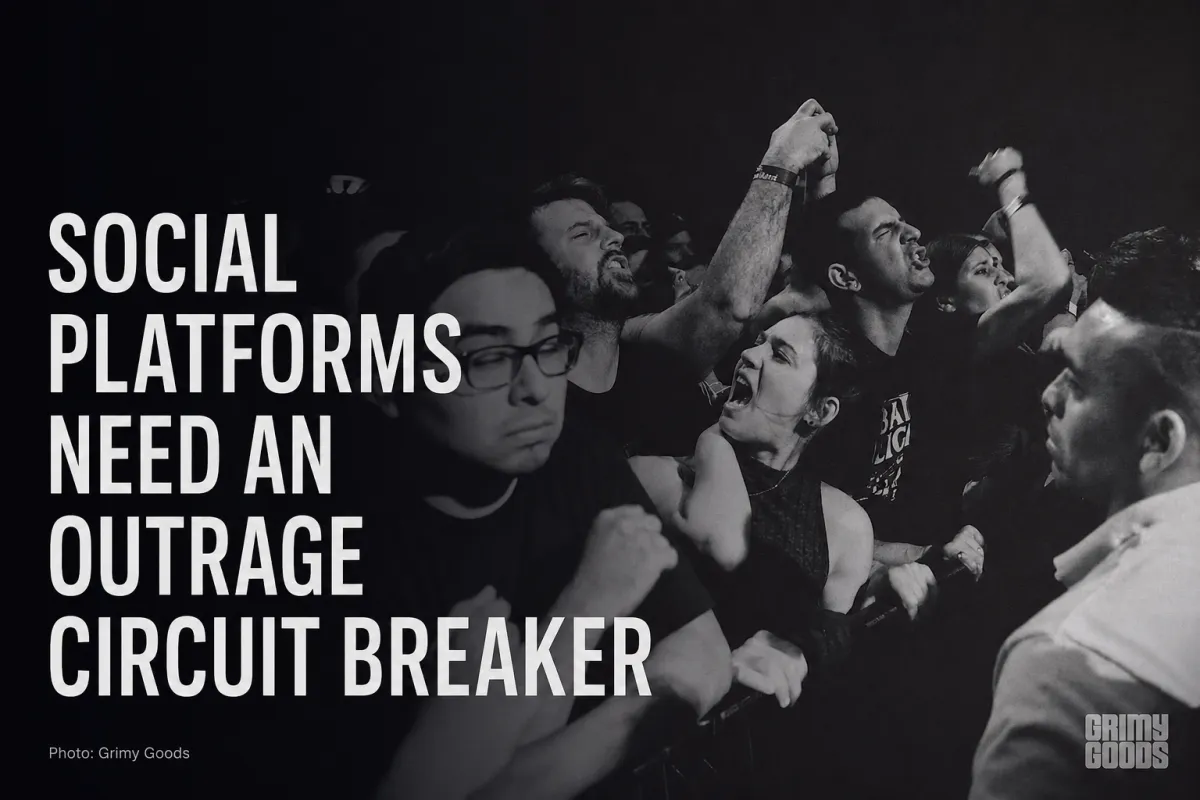
When a crowd starts surging at a concert, responsible organisers stop the show before somebody gets seriously hurt.
Social platforms can see when thousands of people suddenly descend on one person. Yet they let the pile-on continue at full speed.
After the death of Professor Jason Arday, that gap is impossible to ignore.
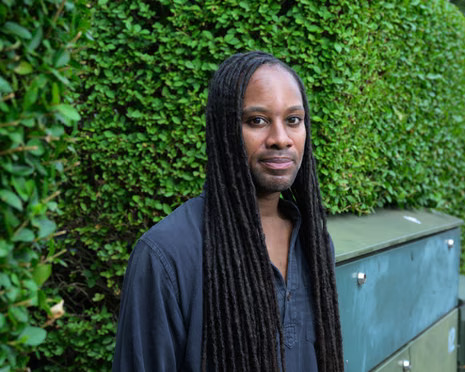
On 3 August, Professor Simon Baron-Cohen, director of Cambridge University’s Autism Research Centre, posted on X about his friend. He described what was happening to Arday as relentless bullying of a vulnerable autistic man, raised safeguarding concerns and asked for it to stop.
Elon Musk replied with one word: “Liar.”
Eleven days later, Arday was found dead at his home in Battersea. He was 41. Police are treating his death as unexpected but not suspicious, and an inquest will determine how he died. That process is still underway, so we need to be careful about the conclusions we draw.
We can still look honestly at what happened online. A leading autism researcher publicly warned that a specific person was vulnerable. He identified the risk and asked people to stop. Nothing in the system slowed the crowd down.
I have been on the other side of a pile-on
I spend much of my working life with creators, but I have also been the talent at the centre of a backlash.
Years ago, I said on Jordanian radio that I disliked a Jordanian national dish. That was it. An opinion about food. The response was so intense that I locked myself in a room for three days.
I remember how horrific it felt. I remember the shame and the way I started questioning my own worth because a large group of people had suddenly decided I was awful.
When you already carry trauma, a public pile-on does not disappear when you close the app. Your body can read it as danger.
Now I see versions of that experience happen to creators: the sleeplessness, the compulsive refreshing and the way a few hours of public contempt can completely rearrange someone’s sense of who they are.
This is why I think social platforms need an outrage circuit breaker.
What Would an Outrage Circuit Breaker Look Like?
It would begin with consent. Any user could voluntarily switch on a protective setting without sharing a diagnosis, medical evidence or personal explanation. They could adjust it or turn it off at any time.
The platform would learn what normal comment activity looks like for that account: how many comments usually arrive, how quickly they arrive and how much hostility is normally present.
If hostile comments suddenly rose far beyond that account’s usual pattern, the platform could respond in stages. A smaller surge might trigger a private alert offering help. A larger, sustained surge could temporarily pause notifications and access to the comment inbox, hold new comments for review and trigger a human safety check.
The account owner would keep control and could override the pause with one click.
A neutral notice could appear in the comments:
Comment activity here is unusually high, so comments are temporarily limited.
The notice would describe what is happening on the account without revealing anything about the person receiving it.
Credible threats, doxxing and self-harm content should bypass the thresholds and go directly to human review.
Accountability Still Needs Safeguarding
The allegations made against Arday were serious, and some appear to have had substance. Institutions disputed parts of his academic history, and Cambridge opened an investigation into his appointment. He resigned on 5 August, saying the personal cost of the scrutiny had become too great.
A Liverpool John Moores University panel had also previously concluded that similarities in his thesis resulted from honest and reasonable error rather than deliberate plagiarism.
A professor’s academic record should be scrutinised. That scrutiny can still be delivered with safeguards.
Mental Health Europe reported that Arday was the subject of 249 articles across 15 UK national outlets in 22 days. That is more than 11 articles a day before counting the social posts, clips and comments generated by each one.
Lord Woolley, principal of Homerton College, described the coverage as “a bloodsport” and said Arday felt hounded. Baron-Cohen said he watched Arday’s mental health deteriorate over the final ten days of his life.
Sometimes the person at the centre of a pile-on has genuinely done something wrong. The criticism may be justified. People can still discuss what happened and demand accountability without having unlimited access to deliver thousands of hostile comments directly into that person’s hands.
When someone becomes the focus of sustained national criticism, somebody should be checking whether that person is safe.
Some People Carry A Higher Risk
Baron-Cohen raised autism because it can increase the risk during an experience like this.
Autistic adults experience much higher rates of anxiety, depression, self-harm and suicidality than the wider population. ADHD has also been associated with a significantly higher risk of suicide attempts and death.
Many neurodivergent people use the term “rejection sensitive dysphoria” to describe the intense pain of perceived criticism or rejection. It is not a recognised clinical diagnosis, so the science around the term remains unsettled. We do know that many people with ADHD experience difficulties with emotional regulation, and that social exclusion can register as genuine emotional pain.
Suicide is complex and rarely has a single cause. The research does show a foreseeable risk, especially for people already experiencing higher rates of anxiety, depression and suicidality. Platforms should take that risk seriously.
For creators, online hostility has become part of the job. In one study of 135 creators across Instagram, TikTok and YouTube, almost every participant remembered experiencing hate or harassment. For one in three, it was a regular occurrence. Some said it made them censor themselves or leave platforms entirely.
The risk rises for people who are already marginalised. A 2024 study of disabled creators found that 96% had experienced disability-related hate or harassment. LGBTQ disabled creators faced an even greater risk of ableist abuse.
These are the same people platforms celebrate in diversity campaigns while leaving them to manage the personal cost of visibility alone.
Why Deleting Comments isn't Enough
The harm of a pile-on rarely comes from a single comment. It comes from unlimited access to an accelerating stream of contempt, at 2am, on a device you cannot put down, with a red badge counting every new hit.
Content moderation can remove abusive comments and suspend accounts. By the time that happens, the person may have already read the comments repeatedly. Almost every safety system focuses on the content. Very little focuses on the state of the person receiving it.
Research involving people under 25 has found a strong association between cybervictimisation, suicidal thoughts and suicide attempts. That gives us another reason to build a brake into the system.
We already accept this responsibility in physical spaces. At concerts and sporting events, organisers intervene when crowd movement becomes dangerous. The pause responds to the speed and direction of the collective movement. It does not require a judgment about every person in the crowd.
An online pile-on works in a similar way. One comment may be manageable. Thousands arriving within minutes become something entirely different.
Privacy and Bias Matter
My first instinct was to make the protection specifically available to people who identify as neurodivergent or as living with serious mental illness. That would require platforms to store highly sensitive health information.
The safer version is to offer protective mode to everyone. People who know they are at higher risk could choose a more sensitive setting. The platform does not need to know why.
Three rules should be non-negotiable. Protective mode should never influence advertising or recommendation systems. It should never be visible to other users. People should be able to revoke their consent and delete any related data.
Automated systems also get things wrong. They struggle to understand sarcasm, slang, dialect and culturally specific language. Research has found that some hate-speech systems are more likely to flag African American English as offensive, while toxicity scores do not translate consistently across languages.
A circuit breaker would need testing across different languages, communities and account sizes. Platforms should publish false-pause rates, provide human appeal and give users control over every trigger.
Platforms Have Already Built Most of It
Instagram’s Limits can hide comments and message requests during spikes of unwanted attention. Twitch’s Shield Mode activates several chat protections at once. Reddit has Crowd Control, YouTube can hold comments for review, and X has tested Safety Mode.
The missing piece is the automatic trigger.
At the moment, the switch sits on the inside of the door, and the person expected to reach it is the one being buried.
Australia’s eSafety Commissioner already asks platforms to anticipate and design out foreseeable harm through its Safety by Design framework. An outrage circuit breaker fits that principle almost perfectly.
The online crowd needs an emergency stop
The creator economy talks constantly about authenticity, vulnerability and bringing your whole self online. Then it hands people a system with no brakes and files the damage under “personal resilience.”
When we tell a neurodivergent creator to leave public life if they cannot take the abuse, we remove them from the industry and then call their absence a lack of talent.
In Arday’s case, somebody warned a platform in public that a vulnerable person was being buried by it. The platform’s owner called him a liar.
When a physical crowd becomes unsafe, somebody stops the show. Online, people should get the same protection.
If this article brought anything up for you, support is available in Australia through Lifeline on 13 11 14 and Beyond Blue on 1300 22 4636.
Sources and Reading
The Jason Arday case
Cambridge autism expert claims bullying of Jason Arday was relentless, The Observer — Baron-Cohen's 3 August post, the Musk reply, and his account of Arday's final ten days
Tributes paid to Jason Arday, The Guardian — the Battersea death, his age, and the Met's "unexpected but not suspicious" wording
Jason Arday: Cambridge professor in plagiarism row quits, BBC News — the 5 August resignation and the personal cost quote
The rise and fall of Jason Arday, The Guardian — the disputed academic history and the Liverpool John Moores panel finding
When scrutiny exposes a double standard, Mental Health Europe — 249 articles across 15 outlets in 22 days
Calls for public inquiry into Jason Arday "witch hunt", BBC News — Lord Woolley's "bloodsport" and "hounded" comments
Higher risk groups
Anxiety and depression in adults with autism spectrum disorder, Psychological Medicine
Risk markers for suicidality in autistic adults, JAMA Network Open
Suicidal behaviour among persons with ADHD, British Journal of Psychiatry
Rejection sensitive dysphoria, Cleveland Clinic — that it is not a recognised clinical diagnosis
Emotion regulation in adults with ADHD, systematic review, PLOS ONE
Neural correlates of social exclusion, meta-analysis, Rotgé et al.
Creators and harassment
How creators experience and cope with hate and harassment online, Google Research — the 135 creator study
Ableism experienced by disabled content creators, CHI 2024 — the 96% and 78% figures
The 24 hour comment section
Cyber bullying claimed our Jessica, ABC — the coronial finding on round-the-clock access and rereading
Self-harm, suicidal behaviours and cyberbullying in young people, John et al.
Dr Shao and the limits of moderation
Douyin vows to crack down on cyberbullying, China Daily — the 15 accounts, 89 videos, 457 comments and 48 reports
The death of Doctor Shao puts online platforms' obligations to the test, Global Times — the family's account of seven months of abuse
Detecting a surge
Understanding online firestorms, Pfeffer, Zorbach and Carley — the five-minute windows and sub-80-second detection
Against Others: Understanding Online Firestorms, Zhang et al. — detection before human observers
Where automated detection fails
The Risk of Racial Bias in Hate Speech Detection, Sap et al.
The Biases of Toxicity Detection Models, Röttger et al. — that toxicity scores do not translate across languages
Existing tools and policy
Protecting our community from abuse on Instagram, Meta — Limits and spikes of unwanted attention
Wellbeing and safety tools, Meta — the break reminders